

Every investment and trading decision comes down to a basic balance of risk versus reward. In other words, taking on too much risk may be costly, with heavy losses, whereas being too cautious can lock you out of meaningful financial gains. Your ideal exit lies via successful risk management for developing long-term financial success.
The risk-to-reward ratio provides a ground for making informed and calculated decisions for traders and investors. Whether you’re involved with high-risk, high-reward projects or a conservative investment strategy, your understanding of the concept will serve you greatly. Without the proper risk-reward approach, even the most lucrative opportunities may become financial disasters.
In this guide, we will examine the risk-reward ratio, find out how to calculate it, how it figures into various other investment strategies, and lastly, how to evaluate your risk effectively without involving unnecessary apprehension. Hopefully, by the end of the guide, you should have your very own framework through which you will measure risk-reward principles against your financial goals.
Understanding the Risk-Reward Ratio
In finance, the risk-reward ratio is a measure of assessing the return one can get from an investment concerning the risk taken. It is a relevant parameter, or rather, the backbone of their decision-making, which is studied intensively by traders, investors, and fund managers to know whether the investment is worth pursuing.
Definition of the Risk-Reward Ratio
The formula for the Risk-Reward Ratio is,
- Risk-Reward Ratio = Potential Loss / Potential Gain
An investor is risking ₹100 to make ₹300, so the risk-reward ratio will be 1:3, which means for every ₹1 risked, an investor is to get back ₹3.
Why is it Important?
- Guided Decision-Making: Assists in the evaluation process as to whether the trade or investment is worth the risk.
- Loss Management: Guarantees that the right risk-reward ratio will limit the loss and increase gains.
- Profit Optimization: By risk-reward setting, investors can provide for such a structure of trades that only a few successful trades are needed to offset many losing trades.
A good risk-reward ratio limits losses while protecting against a set of risks. In practical terms, that means a trader or investor will be ready to lose many trades; however, in the odd event, a trader or investor may take risks so that the outcome should be profitable.

How to Calculate the Risk-Reward Ratio
Calculation of the risk-reward ratio is very simple and can perfectly be accomplished manually or via a risk-reward ratio calculator. It is done in three steps:
Step-by-Step Calculation
- Identify Entry Price -The entry price is simply the intended price for purchase.
- Stop-loss Price – Limit to exit if the trade goes against you.
- Target price – Price where you will take your profits.
- Use the following formula:
Risk-Reward Ratio = Entry Price − Stop-Loss Price / Take-Profit Price − Entry Price
Example Calculation
Assuming that an investor enters a stock trade at ₹200 with:
- A stop-loss at ₹180 (thus risking ₹20 per share)
- A take-profit target of ₹260 (implying a gain of ₹60 per share)
Using the formula:
200−180 / 260−200 = 20 / 60 = 1:3
This indicates that the investor is risking ₹20 to gain 60 in return ₹ an attractive risk-reward ratio of 1:3. This relationship can also be presented in the form of a risk-reward ratio chart.
The Role of Risk-Reward Ratio in Trading
In trading, it is one of those tools that determine long-term profitability. Professional traders do not make a trade until the potential risk and reward have been evaluated. Whatever the market, stock, forex, commodity or crypto trading, successful traders universally guarantee that their risk-reward is positive before taking a trade.
Why this is Important in Trading?
- Optimizes Profitability—A well-defined risk-reward ratio in trading guarantees that winning trades cover losing trades. Although a trader may win only 40-50% of the time, if the reward-risk ratio is high enough, the trader can still be advantageous.
- Automation Controls Risk Exposure – Traders apply stop-loss orders to limit potential losses. Predefining the exit points, in addition to avoiding emotional decisions and mitigating catastrophic loss, do not let one fall into the pit of pessimism.
- Decision-Making – By adopting this ratio consistently, traders have the mindset of a strategist guiding their approach to the market and not a more reactive approach driven empirically from an initial position.
- Adaptability to Market Conditions – Risk reward ratios are used in different market conditions. For instance, Unstable markets need a best risk-reward ratio of 1:4 or 1:5, although on stable markets one may use a lower ratio, such as 1:2.
How do Traders Use It?
- Day Traders – The ratio requirement for profitable outcomes for Day Traders ranges from 1:2 to 1:3 due to their high number of trades each day.
- Swing traders – They love ratios above 1:3 since this lets them keep positions from days to weeks while giving adequate room for profits.
- Long-Term Investors – The target risk-reward ratio for long-term investors exceeds 1:5 because they aim to find profitable deals that will surpass their underperforming investments.
Through a steady and structured application, traders maintain their position in trading to achieve long-term returns.

Best Risk-Reward Ratios for Different Investment Strategies
A successful investment requires distinctive risk-reward ratios according to the specified investment style.
| Investment Type | Recommended Risk-Reward Ratio |
| Day Trading | 1:2 or 1:3 |
| Swing Trading | 1:3 to 1:5 |
| Long-Term Investing | 1:5 or more |
| Options Trading | 1:3 or higher |
| Crypto Trading | 1:3 or higher |
The best decision for selecting a risk-reward ratio stems from a combination of market state and individual risk criteria and financial targets.
Tools to Maintain a Healthy Risk-Reward Balance
A solid risk-reward ratio needs more than mathematical computations since it needs proper implementation of suitable tools and methodologies to work efficiently. Before executing trades, various trading platforms as well as software solutions assist both traders and investors in risk and reward analysis.
Essential Tools for Managing Risk-Reward
- Risk Reward Calculator
- The risk-reward ratio calculation tools exist in platforms including Zerodha, Upstox, Paytm Money and Alice Blue.
- Traders use these tools to verify if their upcoming transactions fulfil their defined risk management and potential reward requirements.
- Trading Platforms with Integrated Risk Management
- Trading platforms equipped with built-in risk management capabilities allow users to integrate frameworks during their trading operations.
- Stop-loss and take-profit features operate automatically as part of the service that numerous online brokers make available to their clients.
- Traders should establish their risk parameters before a trade begins to automate the risk management process.
- Risk-Reward Ratio Chart
- Visual risk-reward ratio displays allow traders to interpret how losses and profits connect.
- Trading systems integrate real-time risk-reward plotting tools which help traders define better entry and exit points.
- Position Sizing Tools
- The tools enable users to calculate their trade funding quantity by setting distinct risk exposure boundaries.
- The tool computes the proper investment amount of shares or units based on the 2% capital risk threshold for traders.
- Automated Trading Bots
- Specific traders deploy algorithmic bots to execute trades automatically with set entry and exit parameters for determining risk against reward values.
- Emotional decision-making gets eliminated through the use of these tools thus maintaining discipline.
The tools help traders and investors follow a controlled system for risk versus reward structure thus protecting their investments by maximizing profits.
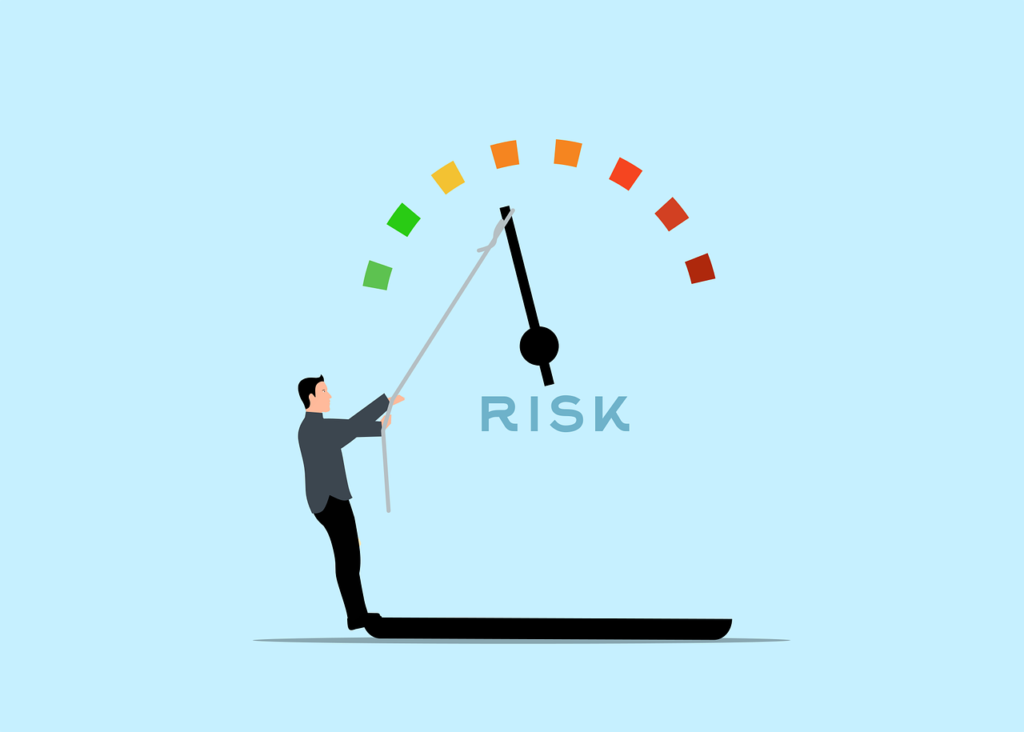
Risk-Reward Ratio in Different Asset Classes
Risk-reward ratios differ according to which asset class exists. Each market demands special risk-management strategies because volatility levels combined with liquidity and danger exposure differ between them.
Risk-Reward Ratios Across Markets
- Stock Market
- Stocks generate returns ranging from moderate to high levels according to market performance.
- General stock market trading follows a risk-reward ratio that spans between 1:3 to 1:5.
- Forex Market
- The leveraged system in currency trading produces very large results from minor price fluctuations.
- The market behaviour causes most foreign exchange traders to select ratios between the ratio of 1:2 to 1:3.
- Cryptocurrency Market
- Extreme market volatility forces crypto traders to apply a 1:4 or 1:5 risk-reward ratio in their trading strategies.
- Risk management stands as the most important factor because Price movements become unpredictable in these situations.
- Real Estate
- Real estate return risk ratios are influenced by geographic feasibility together with market performance and financial lending requirements.
- Due to their long investment periods, investors generally want a 1:5 ratio or higher.
- Commodities
- Gold, silver, and oil traders usually aim for a 1:3 ratio or higher.
- Commodities often follow macroeconomic trends, making risk assessment vital.
- The gold, silver and oil markets require traders to establish trading ratios that exceed 1:3.
- Valuation of macroeconomic trends holds crucial importance due to the fact commodities tend to track those trends.
Statements regarding risk-reward balance in the financial market differ between asset classes while investor strategies should adjust according to selected market conditions.
Practical Strategies for Managing Risk & Reward
To manage risk and reward effectively one needs discipline together with appropriate strategic planning. A well-structured risk management plan helps protect potential business gain through loss control at every point in time.
Proven Risk-Reward Management Strategies
- Set Stop-Loss Orders
- When a position reaches the predetermined loss limit the stop-loss order executes an automatic exit.
- The strategy maintains capital safety by decreasing potentially costly losses.
- Use a Trading Journal
- Splash-generated records of trades along with their entry and exit data help traders recognize patterns that lead to better risk-reward performance evaluation.
- Position Sizing
- The maximum allowable risk per trade should represent 1-2% of the entire investment capital.
- When a portfolio consists of 1-2% allowable risk per trade then losing trades will not destroy the entirety of your investment capital.
- Diversification
- Invest in multiple types of assets to prevent heavy losses from one particular market.
- An investment portfolio which includes different assets enables investors to diminish potential losses while moderating market award volatility.
- Avoid Emotional Trading
- People who trade based on their fear and greed typically make choices that defy logic.
- Users achieve logical decision-making through the implementation of risk-reward plans which they establish beforehand.
Investors can establish profitable sustainable trading while using these combined strategies.

Common Mistakes in Risk-Reward Management
Ongoing trading experience does not stop professionals from making mistakes while handling risk and reward elements. The key mistakes during risk-reward management consist of several common errors:
1. Ignoring Stop-Losses
Most traders avoid placing stop-loss orders because they maintain optimism for their losing trade to recover. Business losses tend to become severe when stop-losses are neglected.
2. Overleveraging
Users of excessive leverage achieve increased profits yet expose their accounts to greater risk. Proper position sizing is essential.
3. Chasing High-Risk Trades
When traders engage in ventures with large profit potentials these deals show unpredictable results. Analysis of trade risk should be conducted by every trader before starting a trade.
4. Misjudging Market Conditions
The risk-reward ratios that prove successful in a particular market cannot work effectively in alternative markets. Investors need to change their investment methods depending on market volatility and directional trends.
People who avoid these mistakes will maintain their financial market endurance.
Conclusion
Risk reward ratio is one of the most important factors in successful investing along with trading. From active trading to long-term investment, a structured risk and reward strategy would ensure continued profitability while managing risks.
Key Takeaways
- The risk-reward ratio that is positively tilted is certainly a boon for a trader in that overall profit would even remain intact with some odds of losses.
- A professional should always use a risk-reward calculator and risk-reward charts before entering any trade.
- Different asset classes require different risk-reward strategies which investors should work on.
- Practical strategies such as stop-loss orders, position sizing, and diversification control risk conveniently.
The gist of creating a disciplined risk-reward approach will allow the investor to sail smoothly in the financial markets, allowing steady growth along with capital protection. Additional platforms and resources exist for risk management enhancement which you should investigate for better results.
- Zerodha – Learn in-depth trading and risk management strategies.
- Through Upstox users can gain access to instruments which compute risk-reward ratios and allow them to implement trades with effective stop-loss settings.
- At Alice Blue Trading Academy learners can obtain knowledge about sophisticated trading approaches together with expert risk management practices.
- Paytm Money – Utilize investment tools for risk analysis and portfolio management.

Risk-Reward Ratios Across Investment Types
Presented below is the comparative table showing different risk-reward ratios over different investment types. The selected ratio changes according to the volatility, attitude toward risk, and potential returns of that asset class.
| Investment Type | Risk-Reward Ratio |
| Stock Trading | 1:3 – 1:5 |
| Forex Trading | 1:2 – 1:4 |
| Cryptocurrency | 1:3 – 1:5 |
| Real Estate | 1:5 – 1:10 |
| Options Trading | 1:3- 1:6 |
| Commodities Trading | 1:3 – 1:5 |
Traders must select their best risk-reward ratio according to their trading approach combined with market trends and their funds management strategy.
FAQs
What is an ideal risk-reward ratio?
The typical acceptable risk-to-reward ratio exists between 1:3 when measured by risk-reward ratio. The investment strategy seeks a profit of ₹3 for every ₹1 you invest in the market. Every trader has distinct approaches which result in variations of appropriate risk-to-reward ratios since market dynamics remain constantly shifting.
How does a risk-reward ratio chart help in trading?
The risk-reward ratio chart provides a visual representation of potential profit and loss amounts to help traders execute well-trained trading decisions. The system helps traders establish stop-loss and take-profit levels which must follow their strategic trading blueprint.
Can a good risk-reward ratio guarantee profits?
Although a good risk-reward ratio fails to promise profits it strongly enhances investors’ sustained profitability. At any point when traders lose more trades than they win the system becomes profitable because of their established risk-reward ratio.
Which steps help get optimal results from a risk-reward calculation tool?
Using a risk-reward calculator allows investors to calculate trade potential returns while factoring in taken risks. To use it effectively:
- Input the entry price.
- Set the stop-loss level.
- Define the take-profit target.
- A trader needs to determine and assess their risk-reward ratio before executing a trade.
What is the most suitable ratio between risks and rewards for maintaining long-term investments?
A 1:5 and higher risk-reward ratio should be used for long-term investing. The successful investments along with their strong performance offset the negative results from underperforming investments through this strategy.
Related Articles:



0 Comments