
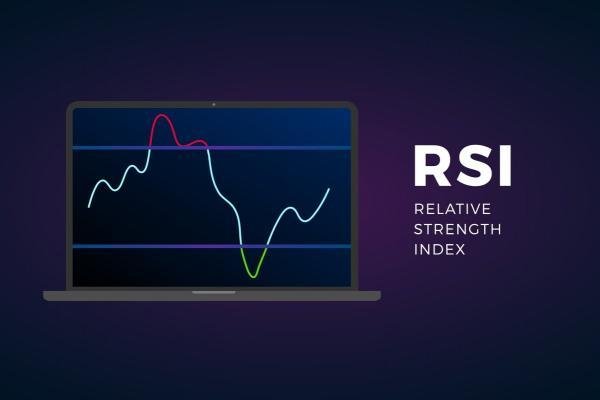
What is the Relative Strength Index?
The Relative Strength Index (RSI) is one of the reliable tools a trader uses meaning that one of the tools most traders can rely on the RSI is the most genuine one. RSI is a momentum indicator mostly used by price action traders to find RSI is trading its momentum. In 1978 J. Welles Wilder Jr. was the one who developed RSI, which enables traders to identify whether a stock, cryptocurrency, or any other asset is overbought or oversold or not.
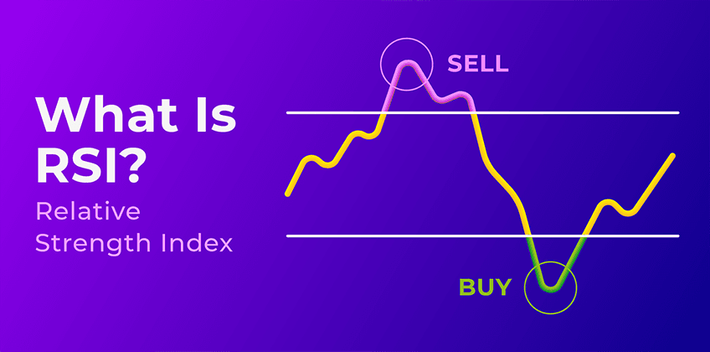
The RSI is considered to have thresholds of 70 and above (arbitrarily chosen) for an oversold condition and 30 and below the limits for an overbought condition. A signal that is implied by RSI is that the currently overbought or oversold state is likely a precursor to a potential trend reversal. So, the RSI is a key tool for traders to find the right entry and exit timing.
The RSI is easy to use unlike other technical indicators requiring extensive calculations making it the most suitable tool for traders. By the end of this tutorial, you will surely learn how the RSI works and use it as a weighting mechanism to become better traders.
How Does the RSI Indicator Work?
The RSI for an asset is calculated on a 0 to 100 scale using two end levels:
- More than 70 → Overbought: An asset experiencing a huge surge in price will not be sustainable. There is a possibility that the price is bound to retract.
- Less than 30 → Oversold: An asset that has a serious price decline may soon experience a correction in the price due to the increasing demand and the decreasing supply as well.
The RSI varies based on the intensity of the price movements leading to a particular time. It compares the average of important recent positive and negative events and loss ratio (for a typical period of the last 14 days) resulting in either value reaching the optimum point (overbought) or the low point (oversold).
When the RSI value gets out of the 70 levels, the buyers were most probably triggered by the low news, and the price might soon resonate. Conversely, when the RSI falls below 30, it predicts that the underpriced asset might make the buyers step in thus pushing the price up.
The detection of these minor hops is the core function of this straightforward tool. Identifying these points along the route will help traders make better buy and sell decisions.
The RSI Formula Explained
The RSI calculation process can help to comprehend the indicator’s performance effectively. Below is the formula for RSI:
RSI = 100− (100 / 1+RS)
Where:
- RS (Relative Strength) = Average Gain / Average Loss
- 14 days is the default look-back period.
Example Calculation:
Suppose we would like to calculate the RSI of stock based on 14 days:
- For the 7 days on which some trading happened, some stocks traded in the exchange were recorded with an average of 1% increase for the trading whereas the 7 other days showed a drop of 0.8% on average.
- On these other 7 days of trading in the stock with the signal of 0.8% of the stock, its performance will not turn out to be the main factor for the other days when the stock will be traded in the other form of the signal of 0.8% which is primarily the removal of its company.
First, we calculate Relative Strength (RS):
- RS = Average Gain / Average Loss = 1% / 0.8% = 1.25RS
Now, we substitute RS into the RSI formula:
- RSI = 100 − (100 / 1+1.25) = 100 − (100 / 2.25) = 100 − 44.44 = 55.56
The outcome of RSI = is 55.56, indicating that the stock is in a neutral zone with no immediate overbought or oversold conditions.
Understanding RSI Levels: Overbought and Oversold Conditions
The different RSI levels should be known to use RSI properly.
| RSI Level | Interpretation |
| Above 70 | Overbought – A potential price correction or reversal downward may occur. |
| Between 50-70 | Strong bullish momentum but may slow down soon. |
| Between 30-50 | Weak bearish momentum, potential for recovery. |
| Below 30 | Oversold – The asset may be undervalued and ready for a price rebound. |
The majority of traders are fond of locating RSI Crossovers as signals. Like, if the RSI takes a step up over 30, it indicates a buying opportunity, on the contrary, if the RSI goes down under 70, it is giving a warning about the possibility of selling.

RSI vs. Other Technical Indicators: Why It Matters
Although RSI can independently serve as a robust tool, it can even become more powerful when applied in conjunction with other indicators.
- RSI vs. MACD (Moving Average Convergence Divergence)
- Whereas RSI evaluates the speed of price change, MACD reveals the size and direction of the current trends.
- A bullish confirmation will be stronger if the RSI is out of the “too low” territory and the MACD points towards a crossover rather than vice versa.
- On the other hand, the sell signal is more powerful if the RSI is in the “too high” zone and the MACD gives a bearish crossover.
- RSI vs. Moving Averages (SMA/EMA)
- RSI is a leading indicator that gives signals of possible reverses.
- Moving Averages are used to follow a longer period’s price trends.
- Signals get better if the RSI and Moving Averages are in line together, thus traders have probability setups for these trades.
The collaboration of different indicators leads to traders increasing their chances of a successful trade with the help of a more accurate strategy and reducing false signals.

Using RSI for Trend Following & Divergence Trading
1. RSI for Trend Following
- In a powerful uptrend, RSI frequently stays between 40-80.
- In a downtrend, RSI is generally between 20-60.
- Instead of selling automatically at RSI 70, traders proceed to wait for confirmation from trend indicators.
2. RSI Divergence for Reversal Signals
- Bullish Divergence: Price makes a little low, but RSI makes a minor low → A possible buy signal.
- Bearish Divergence: Price will show a little higher price but RSI will then show a lower high → A potential sell signal.
With divergences, traders will be able to help themselves at the very reversal times which are most advantageous.
Common RSI Mistakes Traders Make
The misuse of RSI by traders is often responsible for inadequate trading decisions. The following are the most common mistakes and advice on how to avoid them:
- Relying on RSI Alone – RSI must always be corroborated with other indicators to be useful
- Ignoring Trend Direction – Signals from RSI are the best analyzed in the framework of a trend.
- Buying Just Because RSI is Below 30 – Wait for a strong bullish confirmation before entering.
Steering clear of these errors will assist in enhancing precision and boosting trading performance.

FAQs
Is RSI better than MACD?
RSI is very good at detecting overbought and oversold situations, while MACD indicates trend changes better.
What is the best RSI setting for trading?
Traders believe that the best setup usually is a period of 14, but long-term periods of 21 and short ones of 7 are commonly used.
Can RSI give false signals?
Yes, RSI can show incorrect signals at times of serious trends.
Should I buy when RSI is low?
Not a condition, Always look for confirmation before entering into a trade.
How can I improve my RSI trading accuracy?
To get the most reliable trading signals, accompany RSI with MACD, Moving Averages, or volume indicators.
Conclusion: Mastering RSI for Profitable Trading
The Relative Strength Index (RSI) is a good indicator of overbought and oversold conditions. It is beneficial for traders because it assists them both in spotting the reversal of trends and in determining which ones are the strongest and the changes in the point of entry and exit of trade.
To improve precision, the traders should always combine the three strategies which are RSI, MACD, and Moving Averages. Provided that they have adequate knowledge of the program and sufficient practice with it, it can be effectively used to succeed in trading.
If you want to apply RSI in real-time trading, check out these top-rated brokerage platforms offering built-in RSI indicators and low brokerage fees: Zerodha, Upstox, Alice Blue and Paytm Money. Each of these platforms provides real-time RSI indicators, advanced charting tools, and a user-friendly interface.
Related Read: Moving Averages: How to Use SMA, EMA, and WMA to Spot Trends and Reversals



0 Comments