

Serious traders have to have a firm grasp of moving averages. Other tools help you spot trends and reversals in the market. New or experienced traders, by using the moving average methods properly, can maximize their chances of success.
The moving average is a tool that simplifies price variations and shows you the bigger perspective, a mighty one! The trend indicators assist in defining the better option to buy, hold, or sell by taking importance out of each reasonable chance.
In this article, you will learn about the different types of moving averages, their formulas, and how to use them scientifically in trading.
What is a Moving Average?
A moving average (MA) is a stock indicator that averages the price of an asset to the specific period in consideration. Unlike in the case of daily price trends, it provides a simpler measure of price movements, which facilitates identifying long-term trends.
Why Use Moving Averages?
- The tool will support you because it is very easy to read and shows the general market trend, which will make your heart go steady again.
- Traders can determine whether it is the right time to buy or sell by recognizing significant points of the support and resistance levels accompanied by the price trend showing a heavy signature. They usually apply moving averages for developing methods like the crossover trading technique.
Moving Average Formula
The formula for a moving average is the summation of the prices over a certain number of periods divided by that same number of periods. Simply put MA = P1 + P2 + P3 +… + Pn / n
Where:
- MA = Moving Average
- P = Closing prices
- n = Number of periods

Types of Moving Averages
There are three major types of moving averages, each serving different trading styles:
1. Simple Moving Average (SMA)
- The theoretical average price is calculated against every observation and it is given equal weight.
- Best for: Long-term traders who can afford these lagging effects.
- Limitation: Adverse to price movements.
2. Exponential Moving Average (EMA)
- More work is done on recent prices and thus EMA reacts to price movements more swiftly.
- Best for: Day traders requiring quick signals.
- Limitation: Higher sensitivity to price movement on a short-term basis.
3. Weighted Moving Average (WMA)
- WMA lays more emphasis on new price data yet still incorporates some old data.
- Best for: Traders who like some of the SMA’s smoothing but require fast signs of reversals.
- Limitation: Difficulties in understanding its calculation are known.
Understanding the Simple Moving Average (SMA)
The Simple Moving Average (SMA) is commonly utilized for gauging price behaviour over time. This method averages the price of an asset over a predetermined period.
Formula of Moving Average (SMA)
SMA = P1 + P2 +…+ Pn / n
How Traders Use SMA
- When the SMA rises it indicates that the market is bullish.
- The decrease in SMA shows that the market is bearish.
- Crossing the price over the SMA could indicate a change of trend as well.
Example:
A 50-day SMA trading strategy, for instance, means that you calculate the daily average of the past 50 days and change the forecast accordingly.
Need sharper trading strategies? Read through Open Interest Analysis: Introducing OI Pulse for Smarter Trading Decisions.

Exponential Moving Average (EMA)
The Exponential Moving Average (EMA) weights the price of an asset differently from the simple moving average (SMA), which gives equal weights to all prices over the time taken into account. Thus, the SMA is less affected by traders’ emotions and trends than the EMA.
Why EMA is Popular?
- It reacts the fastest to price changes.
- It has a preference for day traders.
- It helps in detecting trends and reversals at the earliest.
Formula
EMA = Pt × (2 / n+1) + EMAyesterday × (1−(2 / n+1)
Where:
- Pt = The Last known price
- n = number of periods
Example:
It can be seen that the 20-day EMA reacts much quicker than the 50-day EMA, on top of that, there are even random movements that are not by any major trend of the stock.
Pro Tip: The EMA is the preferred tool in stock for fast-moving trends.
Weighted Moving Average (WMA)
A Weighted Moving Average (WMA) is a different kind of moving average indicator that counts the most recent data input more than the others.
Key Features of WMA
- Values most recent prices.
- It is speedier than SMA but lower than EMA.
- Kind of handy for a trend-following market with volatility.
Want to learn how to trade successfully? Check sites like Zerodha, Upstox, Paytm Money, and Alice Blue.
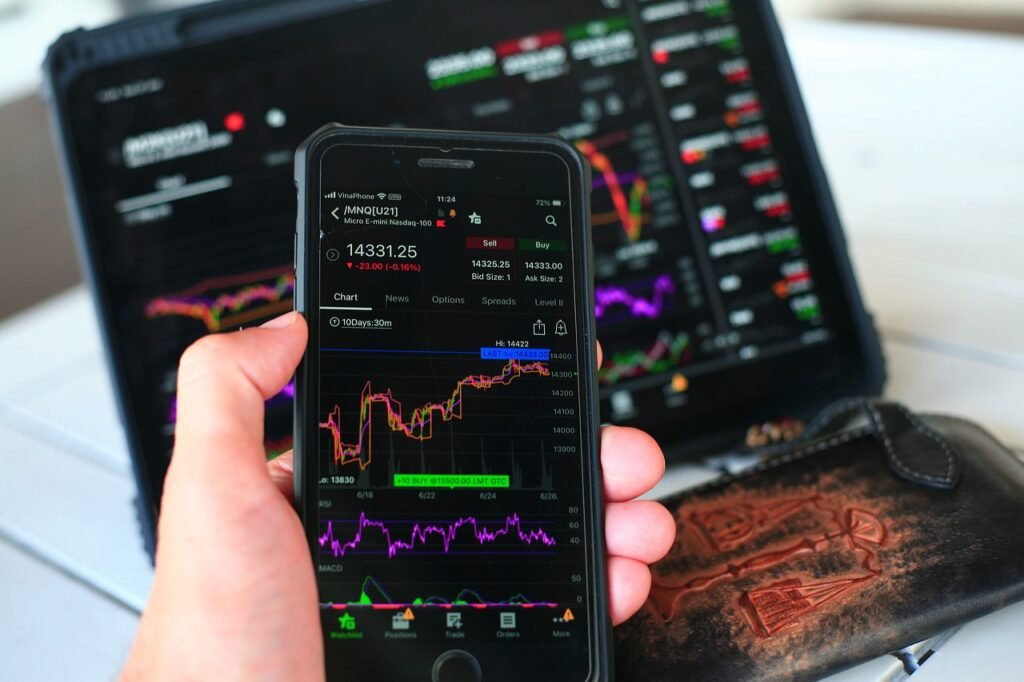
Moving Averages as a Trend and Reversal Indicator
Moving averages are trends and potential market reversal indicators for traders.
How to Identify Trends?
- If the price is higher than the MA, then that trend is considered bullish.
- If the indeed price is under the MA, it can be considered a bearish trend.
How to Spot Reversals?
- A short-term MA (e.g. 20-day) crossing over a long-term MA (e.g. 50-day) indicates a price reversal whereby a flash bearish sentiment becomes aged.
- When a short-period MA goes under a long-term MA, a bearish reversal (DEATH CROSS) is signalled.
Best Timeframes for Moving Averages
Your trading style determines the moving average technique that suits you best.
| Trading style | SMA | EMA |
| Day Trading | 9, 20 | 10, 21 |
| Swing Trading | 50, 100 | 20, 50 |
| Long-term Investing | 100, 200 | 50, 100 |
Advice: EMA is preferred by short-term traders, while SMA is favoured by investors.
Combining Moving Averages with Other Indicators
Traders combine other tools with moving averages to get better results:
- RSI + Moving Averages → The overbought/oversold condition is confirmed.
- MACD + EMA Indicator → Shifts of the momentum, which were not intended, return the momentums of the market.
- Bollinger Bands + MA Indicator → Shows the breakout of the price.
Practical Trading Strategies Using Moving Averages
1. Golden Cross & Death Cross
These are very strong signals of trend reversals that traders utilize:
- Golden Cross (Bullish Signal): It occurs when the 50-day SMA moves above the 200-day SMA, representing an actively increasing sales trend.
- Death Cross (Bearish Signal): When the 50-day SMA falls below the 200-day SMA, there is a potential downtrend detected.
Tip: Once the Golden Cross appears you have a possible buy opportunity but when the Death Cross is seen we consider this a sell recommendation.
2. Dual Moving Average Crossover
This approach supports traders in recognizing intermediate-term trends:
- Buy Signal: This comes when the 20-day EMA is placed above the 50-day EMA, suggesting increasing strength of the bull market.
- Sell Signal: The statement reads that the 20-day EMA will cross below the 50-day EMA which means a price drop is likely.
Note: Traders who trade short-term would use this technique for taking quick buy and sell decisions simply based on the strength and the follow-through of the price change.

Mistakes to Avoid When Using Moving Averages
- Not focusing on the current market movement while relying only on moving averages.
- Choosing the wrong period on the chart for your trading activities.
- Not paying attention to false breakouts and shakeouts.
The Bottom Line
The trend identification and change evaluation process is mainly supported by Moving averages. Also, it depends on the specific trading style one will adopt either SMA, EMA, or WMA.
Does your trading need a boost? To find out more about Technical Analysis: The Key to Understanding Price Action and Chart Patterns.
FAQs
What is the best moving average for beginners?
For an average trader who’s just getting started, using the 50-day SMA is a decent option in observing long-term patterns.
How do I choose between SMA and EMA?
While SMA is considered to be a better investment strategy, it should be noted that EMA is preferred for trading.
Why does EMA give more weight to recent prices?
This happens because the technique used for EMA is based on an exponential formula, which therefore causes it to be more responsive.
Can moving averages predict market crashes?
Apart from being a tool that could help investors anticipate a market downturn, such indicators can also suggest ways to act.
What’s the ideal moving average for day trading?
When it comes to intraday time frames the 9-day EMA versus in trading the 21-day to would be the majority.



0 Comments