
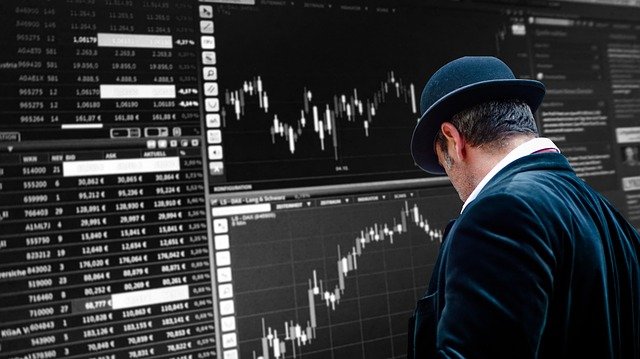
You probably have experienced the adrenaline rush when a trade works out in your favor, or the crushing disappointment when a position sinks into red. Trading is not just a technical analysis and strategies game: it is also all about emotion management.
Most traders enter the realm of trading in the belief that success is purely a function of logic and analysis. Even the best strategies can fail when emotions rule. A trader’s biggest enemy will often not be the market but his own emotions. Fear, greed, anger, and overconfidence have made fools of many to rogue decisions; that, in return, hits profitability.
Appreciating mastery over emotion management is the primary key for survival in long-term trading in the share market. If you know how your emotions affect behavior in trading, you’d also understand how to gauge a strategy whereby you make disciplined moves according to the data rather than impulsive moves based on impulse.
The Psychology of Options Trading
Options and trading of themselves present a very peculiar psychological challenge. Long-term either investing or actions taken in the stock exchange refer to patience and calmness, while options require more quick decisions to be made. One such behavior in trading is explained by the variance of emotions:
- Fear often keeps traders on the sidelines, sometimes leading them to miss out on potential opportunities.
- Greed usually causes them to keep on betting recklessly in broad terms when proper risk and position management should suggest a rest for the day.
- Anger causes a kind of revenge trading, in which a trader tries desperately to pursue losses with successive and disparate trades.
- Lastly, overconfidence may be one’s greatest foe: many traders seldom stop to think about the driving and influencing factors supporting their confidence.
Therefore, there is a need for emotional discipline in successful stock trading; this can be accomplished by gaining in-depth awareness of such emotions and finding methods of channeling them.

The Most Dangerous Emotions in Trading
1. Fear: The Opportunity Killer
Fear is perhaps one of the most common emotions in share market trading. It is induced when the trader fears losing money and thus hesitates to get into a trade or closes them prematurely.
Effect of Fear on Trading:
- Causes traders to exit winning trades prematurely due to the fear of reversal.
- Leads traders to miss profitable trades due to indecisiveness.
- Fails to instill confidence in a well-researched plan.
Ways to Overcome Fear:
- Use trading charts and graphs to base your decision on facts and data, not on any emotions.
- Use stop losses to cut your losses and relieve the anxiety.
- Engage in paper trading on Zerodha and Upstox to gain confidence.
2. Greed: The Profit Destroyer
Greed drives traders into taking excessive risk, keeping their trades open for too long, or entering positions without a clue of where to begin.
How Greed Affects Trading:
- Allows for over-leverage and incorrect risk management.
- Encourages traders to not stick to their exit strategy, keeping hopes high for even more profits.
- Results in emotional rather than strategic trading decisions.
How to Fight Greed:
- Determine beforehand what profits you would like to attain through each trade and stick to that limit.
- In trading, risk and rewards should be considered so that too much capital is not exposed to one trade.
- Stop overtrading: limit yourself to a certain number of trades per day.
3. Anger: The Revenge Trading Trap
Anger often results from losing a trade, and it makes most traders decide to recover lost money by impulsively making a trade.
Effects of Anger on Trading:
- Make traders go for revenge trades for which they never analyze.
- Noting an increase in trade volume makes an increase in lost amounts.
- Does not allow for logical and risk-aid reasoning.
How to Release the Angry Tap:
- Take a break after losing a trade to gain composure.
- Never start trading immediately after a loss to avoid revenge trading.
- Accept losses as a natural consequence of the stock market and trading and move on with a clean sheet.
4. Overconfidence: The Silent Enemy
The confidence of a trader grows when some streak of profitable trading raises their belief of being invincible.
Ways Overconfidence affects Trading:
- Leads to lack of attention directed toward risk management strategies.
- Encourages undisciplined, larger position sizes.
- Leads to careless choices, often followed by huge losses.
How to Conquer Overconfidence:
- Maintain adherence to your trading rules, regardless of unfortunate or fortunate trades.
- Preserve position sizes consistent across the board, avoiding unnecessary risks.
- A monthly analysis of past trades helps you plot your way toward applicable fixes.
The Fill of Emotional Intelligence in Trading
Emotional Intelligence is the capability to identify, decipher, and manage emotive fundamentals. This intelligence is vital therefore as far as discipline and rational decision-making are concerned in stock market trading.
How to Build Up Emotional Intelligence in Trading
- Self-awareness – Identifies those emotional triggers that govern the trading decisions.
- Self-regulation – Deals with the impulse control part of the decisions regarding predetermined trading strategies.
- Discipline – To keep the trading plan on a proper course.
- Stress management – Employ deep breathing or meditation techniques to remain cool under pressure.

Strategies for Managing Your Emotions
Emotional management is strictly nothing more than employing strategies to keep the traders disciplined and focused.
1. The Power of Routine
Following a daily routine decreases the emotional swings.
- Start the day by simply putting in a good market analysis and determining your goals.
- Trade according to a predetermined strategy instead of trading on gut feelings.
- Maintain your form by reviewing your performance regularly.
2. Mindfulness and Meditation
Mindfulness keeps the concentration on present trading activities without letting it deviate. Meditation decreases vulnerability to stress and subsequent impulsive decision-making.
- Meditation practice a few minutes prior to market opening is mandatory for a good trader.
- Do a lot of attention breathing for those moments when the stress level peaks.
- Continually reacting to price fluctuations is an emotional reaction.
3. Journaling Trades
A trading journal allows emotions to be viewed objectively and aids in the re-evaluation of thought processes.
- Record the entry and exit points along with the reasons for each trade.
- Analyze all the mistakes along with the emotional triggers.
- Refine your trading strategies depending on things you learned.
4. Risk Management
Clearly articulated risk management techniques help manage emotional strain when trading charts.
- Do not risk more than 2% of your total capital per trade.
- Restrict the losses by placing stop-loss orders.
- Diversification makes it possible to lower the risk level of an investment.
How Buying and Selling Graphs and Charts Help with Emotion Control
Chart trading allows traders to make decisions based on data and not by emotions.
- Technical indicators like the Relative Strength Index (RSI) and MACD help define entry and exit points.
- Candlestick patterns also provide insights into market trends.
- Support and resistance levels keep impulse trading decisions at bay.
Trading charts take traders out of emotional instinct and onto objective analysis.
Table: Emotion Reaction-Striking Contrast with Their Effects
| Emotion | Impact on Trading | Solution |
| Fear | Exiting too early, missing trades | Use stop-losses, trust strategy |
| Greed | Holding trades too long, overtrading | Set profit targets, limit exposure |
| Anger | Revenge trading after losses | Take a break, avoid impulsive trades |
| Overconfidence | Ignoring risk management, big losses | Stick to a plan, analyze past trades |

Professional Guide to Controlling Orientations in Trading
Managing emotions while trading options is one crucial trait separating pro traders from the inexperienced crowd. Professional traders approach stock trading with a mindset fit for control, decision-making based on strategies, and risk management without letting feelings influence their decisions-such as fear, greed, fury, or overconfidence.
Let us now review the major case study and traditional mechanisms from pros to control their emotions.
Case Study 1: Paul Tudor Jones – A Paragon of Discipline
Paul Tudor Jones, one of the most illustrious hedge fund managers, has proved to be an able master over his emotions while trading in the share market. He notably forecasted the stock market crash of 1987, amassing huge profits through mental balance while others panicked.
Key Strategies Used:
- A Strict Stop-Loss Discipline: He sets a predefined risk to be taken per trade and never violates this rule.
- Avoiding Overconfidence: He remains cautious even after successful trades.
- Risk Management Before Everything Else: He strongly believes that protecting capital is more important than making profits quickly.
- Journaling Trades: Keeping a journal of trades done will allow learning from past mistakes.
Case Study 2: Warren Buffett – Rational Investor
Although Warren Buffet is more of a long-term investor than an options trader, he is admired for his qualifications in emotional control and composure, especially during market crashes.
Key Strategies Used:
- Patience Over Panic: He doesn’t react emotionally to short-term price movements.
- Decision-Making Based on Data: Every investment decision is based on hard-core fundamental analysis.
- Ignoring Market Noise: He avoids reacting to media hype and competition from other psychology.
- Assuming Down Markets: Instead of panicking at every fall on the market, he sees it as another opportunity.
Case Study 3: Mark Douglas – Trading Psychology Expert
A number of things stand out beautifully in the work of Mark Douglas, author of the classic Trading in the Zone. He emphasizes that institutional or professional traders approach the stock market or else practice trading under the premise of probabilities. Such research has proven that an emotionally intelligent trader performs much better than someone who does not possess such skills.
Key Strategies Used:
- Think Probabilistically: He expects losses will inevitably happen and sees trading as games of probabilities.
- Don’t Emotionalize Trades: Trading for him is executing on probabilities, which has nothing to do with personal successes or failures.
- Predefine Your Trading Rules: He sticks to a structured system and methodology and reverses feelings.
- Remain in the Moment: He engages in mindful practices to set the focus only on the current trade and not hold on to fear from past losses or future gains.
Common Strategies Used by Experienced Traders to Control Emotions
Following these studies, practical techniques that experienced traders use to maintain emotional discipline include:
- Automated Trading Systems
- The professional trader mainly uses automation to save themselves from the emotional burden of trading lotteries.
- They have the option to use platforms like Alice Blue and Upstox that provide automation for connecting the trades through triggering pre-defined conditions.
2. Use Pre-Trading Rituals
Many professional traders start their day with some structured activities, such as:
- Market review & analysis.
- Previous trade review.
- Setting realistic profit/loss expectations.
3. Take Trade Plan Seriously
A good trading plan encompasses:
- Entry/exit rules based on analysis of the chart.
- Setting risk management techniques.
- Avoiding high expectations not to become emotionally charged.
4. Using Risk-Reward Strategies
- The ratio model is adhered to by the experienced traders (1:3). The security of these traders depends upon gaining more from a winning trade compared to a losing one.
5. Work with Breaks and Don’t Over-Trade
- Increased levels of anger and greed have led to an increase in the level of “overtrading”.
- Professionals will generally take a break in-between following a bad trade, step away, take a breath, and get back into the game.
6. Introduce Mindfulness and Meditation
- Many top traders use mindfulness techniques in order to stay focused to avoid impulsive decisions whilst executing possibilities within the market.
- Meditation allows a person to reduce anxiety and emotional exertion.
7. Keep a Trading Journal
- In order to identify the subsets of emotional instances, every trade should be written down to help optimize potential trade practice.
- Professional traders go through their journals once a week to assess the common psychological mistakes.

The Role of Trading Platforms in Emotion Management
Modern trading platforms provide instruments to help traders discipline their ones.
- Zerodha – Advanced charting features and risk management tools.
- Upstox – Paper trading to practice strategies without risk.
- Paytm Money – Simplified interface for beginner traders.
- Alice Blue – Automation while trading to minimize emotional decisions.
Final Thoughts and Conclusion
Mastering emotion management in options and trading is essential for long-term success. Trading is not just about technical knowledge but also about handling feelings with discipline.
- Building emotional intelligence is essential for developing rational thought.
- Follow structured routines to avoid emotional biases.
- Data-driven analysis using trading graphs.
- Risk management to protect capital.
Incorporating these professional trading techniques can help retail traders develop stronger mindsets against emotional lapses and ensure long-term profitability.
FAQs
How do I deal with trading fear?
Just use stop-loss orders, examine historical data, and try to start with some smaller trades to build your confidence
Why is emotional intelligence important in trading?
Emotional intelligence allows a trader to handle their emotions better, take a step back and look at everything reasonably without making impulsive decisions, and ensure they have discipline.
What is the best way to take steps to prevent anger from entering your trading activities?
Regular breaks within a trading session, do not revenge trade, lose with acceptance.
How does discipline function within trading?
Discipline ensures traders act on their trading strategies, review their risk management practices, and avoid trading under pressure of emotions.
Does mindfulness help make better trades?
For sure, mindfulness provides relaxation and improves alertness, which leads to sound decision-making in trading.
Related Articles:


0 Comments