
Explore Our Blog Categories
Latest Insights & Articles

Bollinger Bands: Volatility-Based Trading
Bollinger Bands helps to analyze the overbought or oversold position of the market using the method of traders…
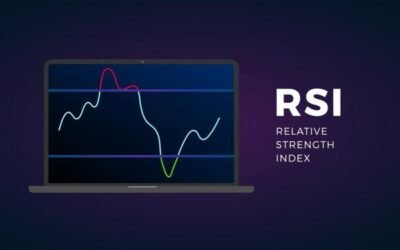
Relative Strength Index: For Overbought and Oversold Conditions
The Relative Strength Index (RSI) is one of the reliable tools a trader uses meaning that one of the tools most traders can rely….

Central Pivot Range (CPR): Price Action Trading
CPR is the one that indicates the price first and not the one that does it after giving us the assistant…..
MACD Explained: Ways to Use This Powerful Indicator
MACD is the abbreviation for Moving Average Convergence Divergence which is a contextual method with….
Moving Averages: How to Use SMA, EMA, and WMA
A moving average (MA) is a stock indicator that averages the price of an asset to the specific period in….

Open Interest Analysis: Introducing OI Pulse
The inquiry is whether you understand the essence of open interest and its importance. Open interest (OI) denotes the cumulative….

Option Greeks: How Delta, Gamma, Theta, and Vega Impact Your Trades
Option Greeks are mathematical scripts used to determine how the option price is influenced…

Technical Analysis: Price Action and Chart Patterns
Technical analysis may initially appear daunting for beginners, but it is mainly about recognizing the pattern by which prices rise….

Health Insurance: Eligibility, Costs & Claims
Health insurance not only assures but also provides quality healthcare to you and your family without the worry of costly bills….
What is the difference between investing and trading?
Investing is a long-term approach focused on wealth creation, while trading involves short-term buying and selling of assets for quick profits.
How much money do I need to start investing?
You can start investing with as little as ₹500 in mutual funds or fractional shares in stocks.
What are the safest investment options for beginners?
Fixed deposits, government bonds, blue-chip stocks, and index funds are considered safer investment options.
How do I choose the best stocks for investment?
Research company fundamentals, financial performance, industry trends, and future growth potential before investing.
What is a mutual fund, and how does it work?
A mutual fund pools money from multiple investors to invest in stocks, bonds, or other assets, managed by professional fund managers.
📌 Long-Term Investing: Invest in blue-chip stocks, mutual funds, and ETFs for steady growth.
📌 SIP (Systematic Investment Plan): Start with small amounts and invest consistently to build wealth over time.
📌 Diversification: Spread investments across different asset classes to manage risk.
📌 Emergency Fund: Before investing, ensure you have at least 3-6 months’ expenses saved.
❌ Investing Without Research: Always analyze a stock before buying.
❌ Panic Selling in a Market Crash: Stay patient and focus on long-term gains.
❌ Ignoring Diversification: Don’t put all your money in one stock or asset class.
❌ Timing the Market: It’s impossible to predict the perfect entry or exit—focus on consistent investing.
Dive Deeper into Financial Success
Ready to take the next step on your financial journey? Explore our latest articles to stay updated with the best strategies and tips.
